
Guides · Materials
Marble alternatives for a Las Vegas kitchen
Why quartzite and quartz usually make more sense than marble in a kitchen that gets used every day, and how to care for marble if you still want it.
The short answer
If you want the marble look in a Las Vegas kitchen that gets used every day, start with quartzite. It’s a natural stone that can look a lot like marble, but it’s harder than granite, so a wine spill that would mark marble leaves it alone. If you’d rather never think about sealing, engineered quartz gives you a similar pale, veined look with almost no maintenance, as long as it stays indoors.
Of the three, marble is the softest and needs the most care. We fabricate it when a client specifies it, and the care steps are below. On quartz vs marble for a working kitchen, quartz wins on durability and upkeep, and quartzite does the same while staying a natural stone. Both get you close to the marble look without the work marble takes to keep up.
Why people love marble
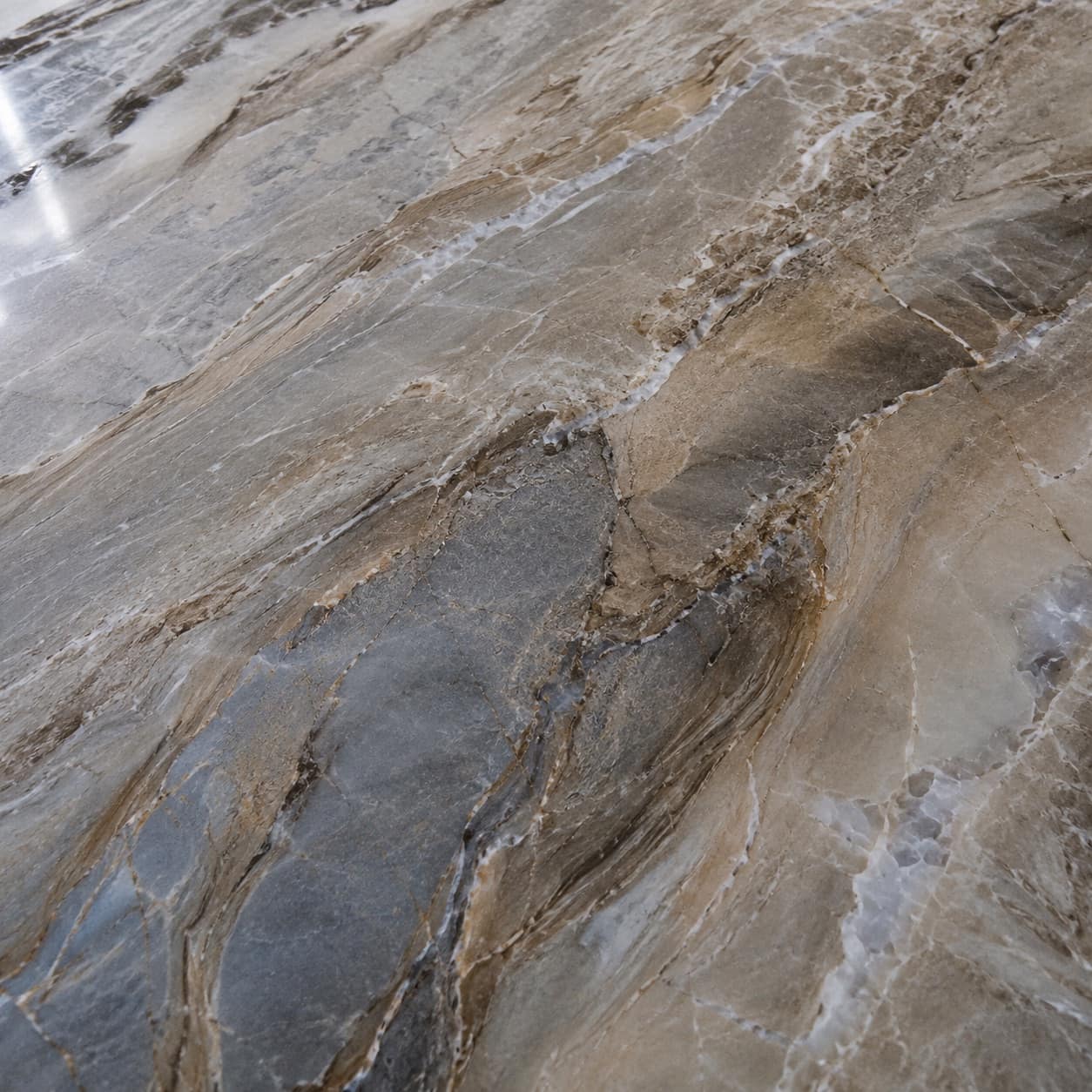
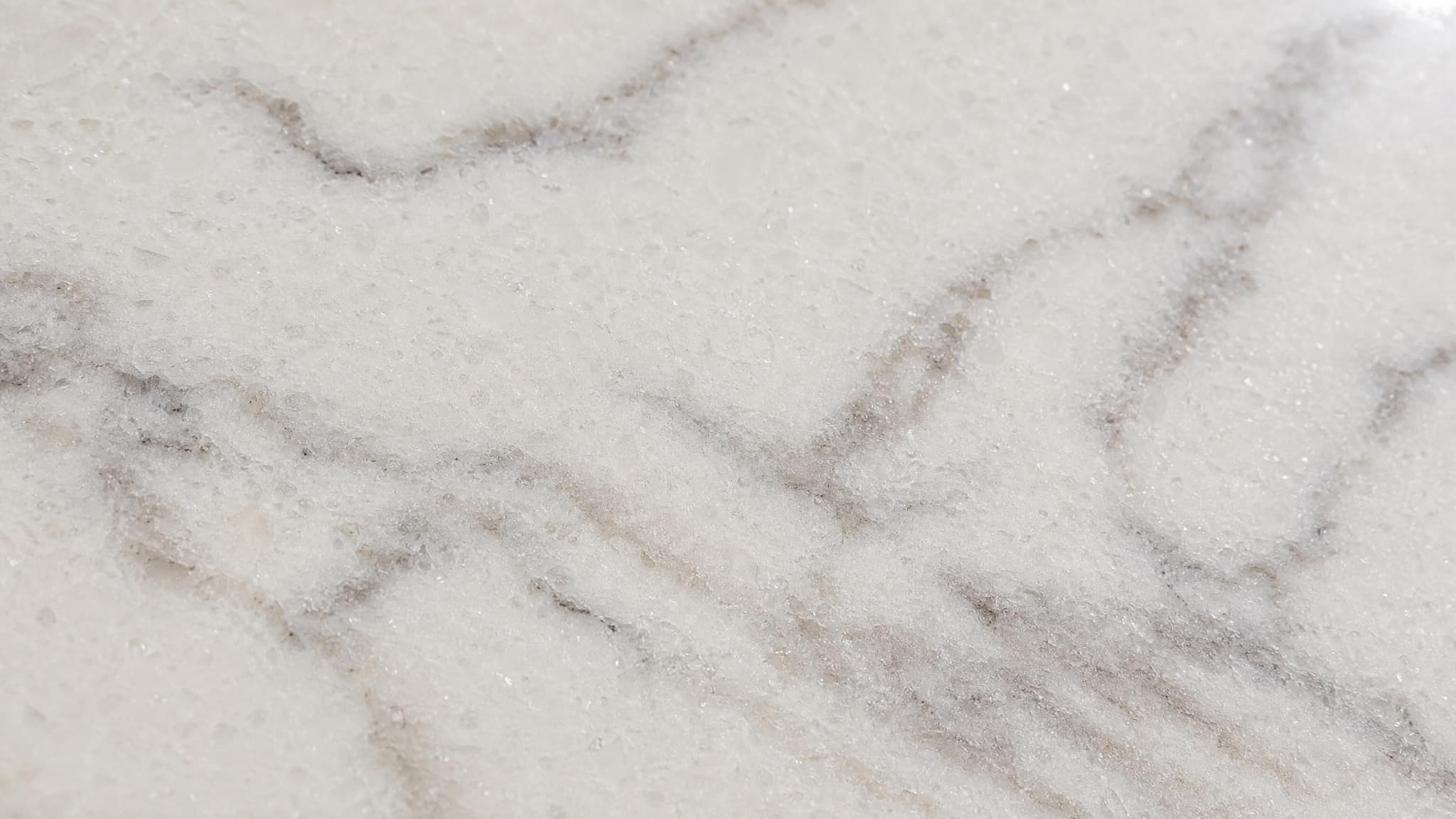
Marble is the most beautiful stone in the business. Its veining moves in a way engineered materials can only approximate, and no two slabs look the same. It’s the stone in the kitchens people photograph and the bathrooms that make a house feel finished, and it’s a favorite for fireplace surrounds. It has been the standard for an “elegant” surface for a very long time.
If you’re drawn to marble, you have good reason to be. What you need to decide is whether it belongs on the surface where you’ll set down a glass of red wine, squeeze a lime, or leave a bottle of olive oil sitting overnight.
Where marble countertops struggle in a working kitchen
Marble is calcium carbonate, the same mineral as chalk, and in a busy kitchen it behaves a little like chalk does.
- Marble is soft. It scratches more easily than granite, quartzite or engineered quartz, and a dropped knife or a dragged pan can leave a mark.
- It stains. Marble is porous, so oil, wine and coffee can work their way into the surface if they sit for a while.
- It etches, which is the one most people don’t expect. Anything acidic (wine, citrus, vinegar, tomato sauce) reacts with the calcium carbonate on contact and leaves a dull mark in the finish. You can’t clean an etch off because the surface itself has changed, and polishing it out is a real repair.
- It needs sealing. Unsealed marble absorbs whatever touches it faster than granite or quartzite does. Sealing slows that down but doesn’t stop it for good.
Las Vegas adds hard water, which leaves mineral deposits that show up more on a pale, porous surface. Even in a house that runs the air conditioning most of the year, the sink and stove areas get water and acidic ingredients every day. Marble can still work there. It just asks more of you than the other stones on this page.
If you still want marble: how to care for marble countertops
Marble countertops stay looking right if you keep them sealed, wipe up acids and oil quickly, clean them gently and protect them from knives and heat. We fabricate marble when it’s specified, and these are the habits that matter.
- Seal it and check the seal. A good sealer slows staining and gives you time to clean up a spill before it sets in. Every so often, drop a little water on the surface. If it beads up, the seal is holding. If it soaks in, it’s time to reseal.
- Wipe up wine, citrus and vinegar right away. They etch marble on contact, so you have seconds to prevent a mark. A quick wipe with a damp cloth is usually enough if you catch it fast.
- Watch the oil. Cooking oil left on marble, especially overnight, will stain, so wipe it up the same way you would wine.
- Clean with a pH-neutral stone cleaner. Anything acidic (vinegar-based cleaners, citrus sprays) or abrasive wears down the sealer and the finish.
- Use cutting boards and trivets. Because marble is soft, knives and hot pans are the two easiest ways to leave a permanent mark.
None of this is complicated. It’s more day-to-day attention than a harder engineered surface needs.
Quartz vs marble vs quartzite, compared
Not sure which material fits your kitchen? Talk through quartzite and quartz with us.
Quartzite is the natural-stone choice. It forms the same way marble does and can have a similar pale, veined look, but the mineral is harder, closer to granite than to marble. You can leave a glass of wine on quartzite for an hour and nothing happens. It still benefits from sealing now and then, but it doesn’t etch the way marble does, and it works indoors and outdoors.
Quartz is the low-maintenance choice. It’s engineered from ground quartz and resin, so the veining stays consistent from one edge of the slab to the other instead of shifting the way natural stone does. It never needs sealing, resists stains well and handles daily kitchen use without much thought. The tradeoff is that quartz belongs indoors. Direct sun fades the resin and can damage it over time, so quartz isn’t the material for an outdoor kitchen or a covered patio bar.
Marble is still the original. Nothing else matches its depth and movement exactly, so in any quartz vs marble comparison, looks are where marble holds its ground. If you have to have that look, we’ll fabricate it and help you look after it. Just know what it asks of you before you commit.
| Quartzite | Quartz | Marble | |
|---|---|---|---|
| Look | Natural veining close to marble; variation between slabs | Engineered veining; consistent slab to slab | The original marble look, with the most depth and movement |
| Hardness | Harder than granite | Hard, holds up to daily use | Softer than the other two |
| Sealing | Needs periodic sealing | Never needs sealing | Needs regular sealing |
| Etching | Resists etching from wine, citrus, and other acids | Resists etching | Etches on contact with acidic spills |
| Sun tolerance | Handles indoor and outdoor installations | Indoor use only; fades in direct sun | Indoor use only |
What designers usually spec
Designers who love the marble look usually put marble-look quartz or quartzite on the kitchen counters and save real marble for surfaces that see less use. In our experience, when the family actually cooks, they land in one of two places. On an island or full perimeter that gets heavy daily use, marble-look engineered quartz is the common pick because the homeowner never has to think about it. For a client who wants natural stone and understands the tradeoff, quartzite shows up more often than marble, especially on kitchen counters, since it gets close to the look and survives real use. Marble itself tends to go on a powder room vanity, a fireplace surround or a bar back, where a wine spill or a dragged pan is less likely.
Answers
Frequently asked questions
- Is marble good for a Las Vegas kitchen?
- Marble can work in a Las Vegas kitchen, but it asks more of you than most people expect, especially with hard water and daily use around the sink and stove. It scratches, and it etches as soon as something acidic touches it, like wine, lemon juice or a vinegar dressing. Regular sealing slows staining but doesn’t stop it. If you love the look and don’t mind resealing and wiping up spills quickly, marble can work well. If you want the look with less upkeep, quartzite or quartz is the better fit for a kitchen in daily use.
- What looks like marble but is more durable?
- Quartzite is the closest natural match. It often has the pale, veined look of marble, but it’s harder than granite and resists etching from wine, citrus and other acids that mark marble on contact. Engineered quartz is the other option. It copies marble’s veining, needs almost no maintenance and resists stains well, though it should stay indoors because direct sun can fade and damage it over time. Either one gives you the marble look with far less upkeep.
- Quartzite vs marble: what's the difference?
- Both are natural stone and can look alike at a glance, but they behave very differently in a kitchen. Marble is softer, scratches more easily and etches when an acidic spill touches it, so it needs frequent sealing and careful use. Quartzite is much harder, close to granite, and holds up to a wine spill or a squeeze of lemon that would etch marble right away. If you want the marble look in a kitchen where someone cooks every day, quartzite gives you that with far less maintenance.
- How do I care for marble countertops?
- Seal marble regularly, and test it now and then by dropping a little water on the surface. When the water stops beading up, it’s time to reseal. Wipe up wine, citrus, vinegar and oil as soon as they land, because they etch or stain marble on contact instead of sitting on top the way they would on a harder surface. Clean with a pH-neutral stone cleaner, never anything acidic or abrasive, and use cutting boards and trivets to prevent scratches and heat marks.
- Can marble be used outdoors?
- We don’t recommend it. Marble is soft and porous and already needs careful upkeep indoors. Outside, sun, heat and hard water make the staining, etching and wear on the surface worse over time. For an outdoor kitchen or BBQ surround, quartzite is the better choice. It handles direct Las Vegas sun and daily exposure without the upkeep marble would need in the same spot.
We fabricate quartzite and quartz slabs in our own Henderson shop. Read more about quartzite countertops and quartz countertops, or start with the kitchen countertops overview.