
Natural stone
Quartzite countertops for Las Vegas homes
Quartzite countertops are cut from natural stone quarried from the ground, and Calder fabricates and installs them for homes across Las Vegas. Despite the similar name, quartzite is a different material from engineered quartz. It is harder than granite, it handles an acidic spill like red wine, and it gives a kitchen the look of marble while being far tougher.
On quartzite vs quartz: pick quartzite if you want the one-of-a-kind pattern of natural stone, and quartz if you never want to seal anything. Both are durable choices for a Las Vegas home, and people mix them up often enough that we wrote a separate page for each. Compare quartz countertops directly. Quartzite is mined stone, so no two Las Vegas kitchens with quartzite counters look quite the same, even when the slabs came from the same quarry block.
Geology
How quartzite forms
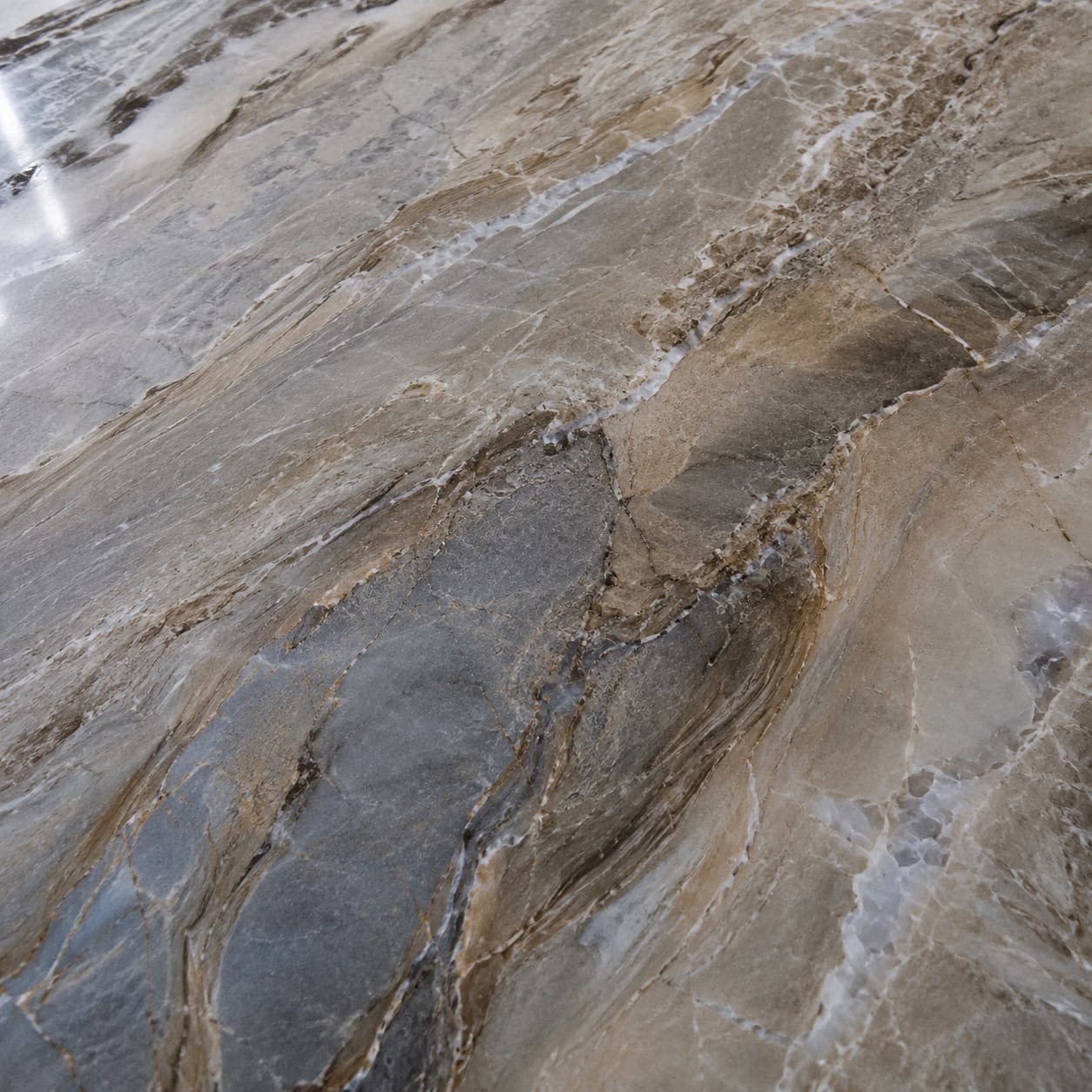
Quartzite starts as sandstone. Over millions of years of heat and pressure deep underground, it recrystallizes into a dense, hard stone. It is quarried and cut like granite and marble, while quartz is made in a factory. That natural process gives quartzite real veining and movement like marble, with a much harder mineral structure underneath. Colors run from soft whites and grays to warmer taupe and gold, depending on the minerals present when the stone formed. Slabs vary noticeably, even ones cut from the same block.
Six reasons
What quartzite countertops bring to a kitchen
Harder than granite. Quartzite ranks higher on the mineral hardness scale than most granite, so it resists scratches and everyday wear even better. That counts most on a kitchen island where you prep food every day.
It stands up to red wine. A spilled glass of red wine or a splash of lemon juice sits on the surface without eating into it the way it can on some other stone. That is part of why quartzite is a popular kitchen island material.
It looks like marble and is much tougher. Quartzite has the soft veining and movement people love in marble, and it doesn’t scratch and stain the way marble does in normal kitchen use.
Every slab is different. Quartzite is natural stone, so each slab has its own pattern and the countertop in your kitchen will be the only one like it.
One crew does the whole job. We fabricate it in our Henderson shop and install it ourselves, with one team from concept to completion and one point of contact for you the whole way.
It suits a kitchen that gets used. The stone is dense enough for daily prep and family traffic, and you can set a hot pan down on it without worrying about the surface.
The tradeoff
Quartzite needs sealing now and then
Quartzite is one of the hardest natural stones you can buy, and it still needs sealing from time to time to resist stains as well as it can. How often depends on how you use the countertop and how it was sealed at installation, so we go over a simple care routine with you once your countertop is in. Sealing is a small job that comes up occasionally, and it is what you trade for a natural stone pattern no one else has.
Slab first
Planning the veining
Quartzite is natural stone, so the slab you pick is the exact piece that becomes your countertop, veining and all. These decisions shape how it looks in the finished kitchen:
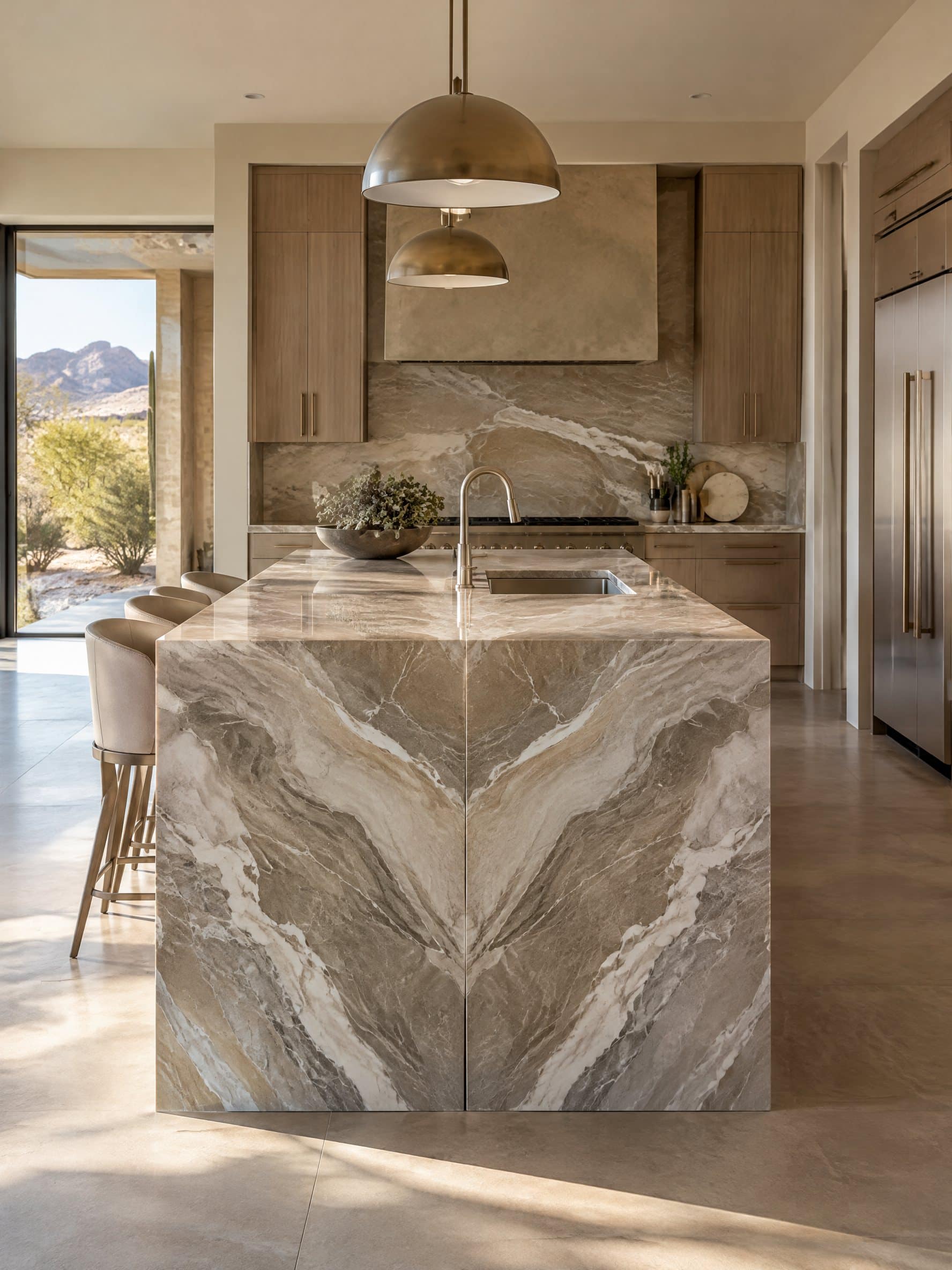
Bookmatching. Two slabs cut from the same block can be laid side by side so the veining mirrors across the seam. This works especially well on a large island or a waterfall edge.
Edge profile. A simple eased edge keeps attention on the natural pattern. A full bullnose softens the look in a more traditional kitchen.
Vein orientation. Every slab is different, so we decide which way the veining runs at the digital layout stage. The movement then lines up the way you want across the finished piece.
We go through all of it with you on the layout of your slab before anything is cut. The full project path, from first call to final walkthrough, is on our process page.
In the shop
Cutting a veined stone
Quartzite is dense enough that the blade and the feed rate decide how clean the edge comes out. That is one reason we cut it in-house on our five-axis bridge saw instead of sending it out. We plan cut lines and seams around the veins before the saw starts, so the movement you picked at the slab wall is the movement you see on the island. Calder work is licensed through Brady Builds LLC, NSCB license 0092206 (C-19 Terrazzo and Marble), and the crew that cuts your slab is the crew that installs it. See the fabrication shop.
Start my quoteRooms
Where quartzite belongs
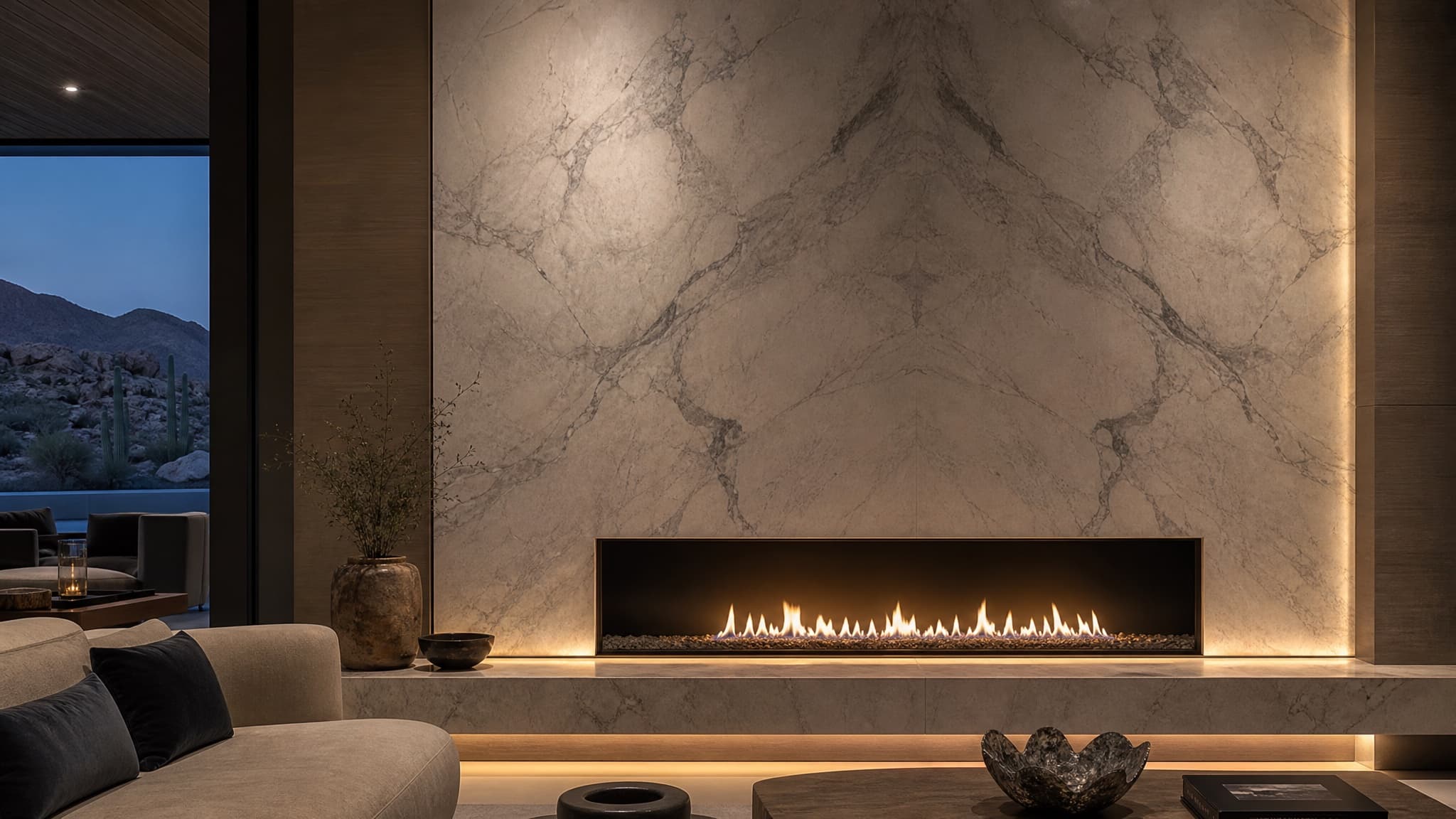
Quartzite is a strong choice for kitchen countertops, where its hardness stands up to daily prep, bathroom vanity tops, where the natural veining shows well under good lighting, and a fireplace surround or feature wall where a large-format slab with real movement becomes the main thing you notice in the room. Each slab is different, so for these projects it pays to choose your slab with care.
Common questions
Quartzite vs quartz, and other questions
- Is quartzite the same as quartz?
- No. Quartzite is natural stone, quarried and cut from the earth. Quartz is engineered stone, made from crushed quartz mixed with resin. The names are similar and the materials are made in completely different ways. Quartzite is usually the harder of the two.
- Is quartzite more durable than granite?
- Quartzite usually ranks higher on the mineral hardness scale than granite, so it resists scratches and everyday wear better. Both are long-lasting natural stones for a Las Vegas kitchen. The choice often comes down to the pattern and color you want as much as the difference in hardness.
- Does quartzite need to be sealed?
- Yes, now and then. Like most natural stone, quartzite needs an occasional reseal to keep resisting stains from wine, oil and acidic foods. It is a simple job and you won’t do it often.
- How are seams handled on quartzite?
- We plan seams at the layout stage, before cutting, so the natural veining lines up across the joint as closely as possible. A well-cut seam fits exactly, with no gaps. It is sealed with a color-matched adhesive so the joint blends into the veining.
- Is quartzite a good alternative to marble?
- Yes. Quartzite has the soft, natural veining people love in marble and resists scratches, etching and stains far better. Most homeowners who start out wanting marble choose quartzite once they see the two side by side, because they get a similar look without the constant care marble needs in a busy kitchen.
- What edge profile works best with quartzite?
- Most edge profiles work well on quartzite, from a simple eased edge to a full bullnose. The pattern varies across each slab, so we plan the edge and the layout together at the digital layout step to make the veining look right from every angle.
Specifying for a client? Visit our trade page.