
Built for daily use
Kitchen countertops
The best kitchen countertops for a Las Vegas remodel are the harder materials: quartz, quartzite and granite, along with Caesarstone and Cambria, the two quartz brands we’re certified for. Calder fabricates and installs all five from our Henderson shop, and one crew handles your project from slab to seam.
Your options
Materials for a kitchen remodel
A kitchen counter deals with hot pans, knife work, spilled wine and homework at the island every day for years. Every material below holds up to that. They differ in upkeep, look and price range.
Quartz
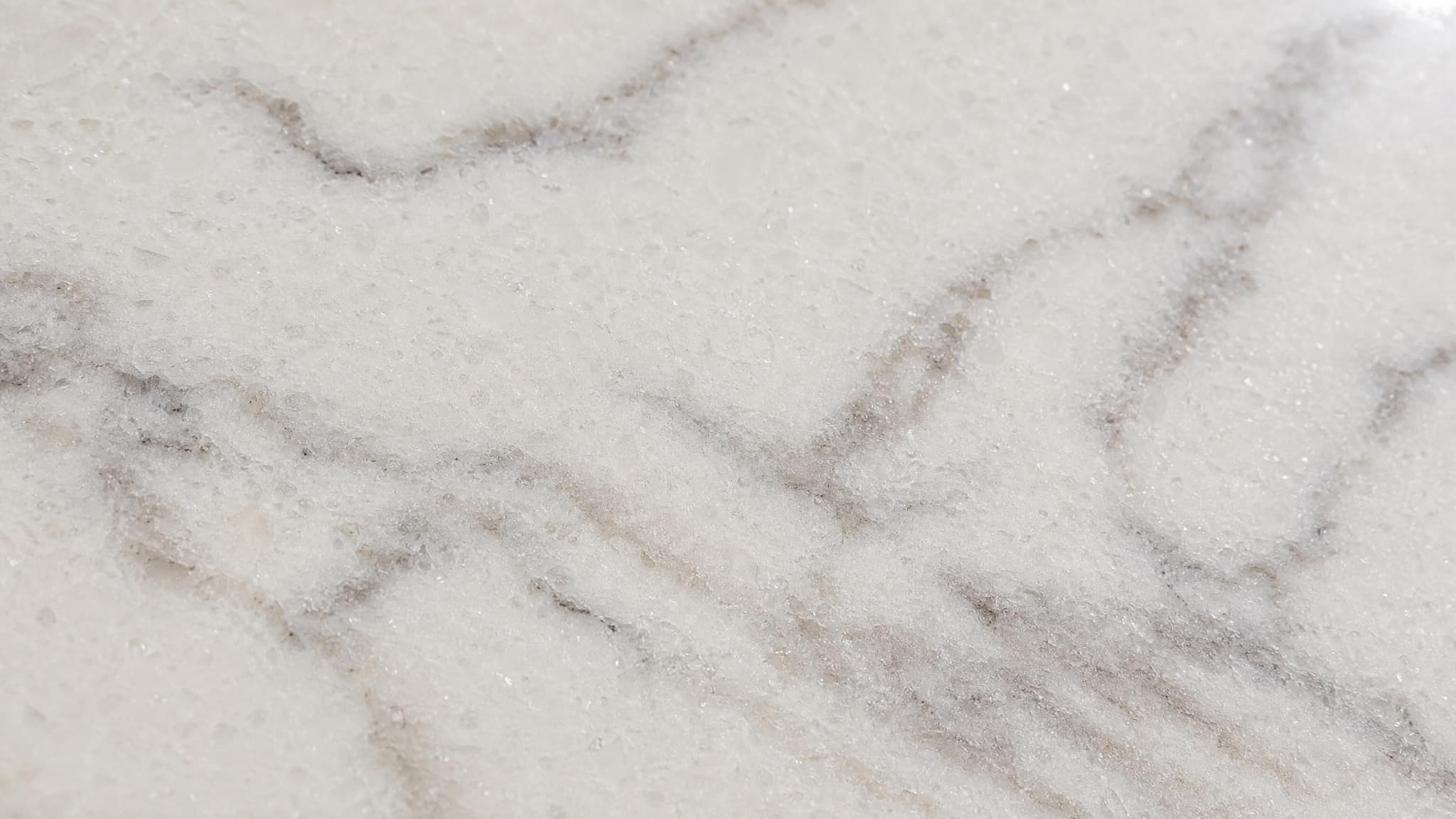
Quartz is an engineered material made in a factory. It comes in more colors and patterns than anything else on this list, resists stains without sealing, and wipes clean after a spill. It does need to stay out of direct sun, because quartz fades outdoors. For a kitchen island or a full run of counters, it’s the lowest-maintenance option we install. Read more about quartz countertops.
Quartz · slab detail Quartzite
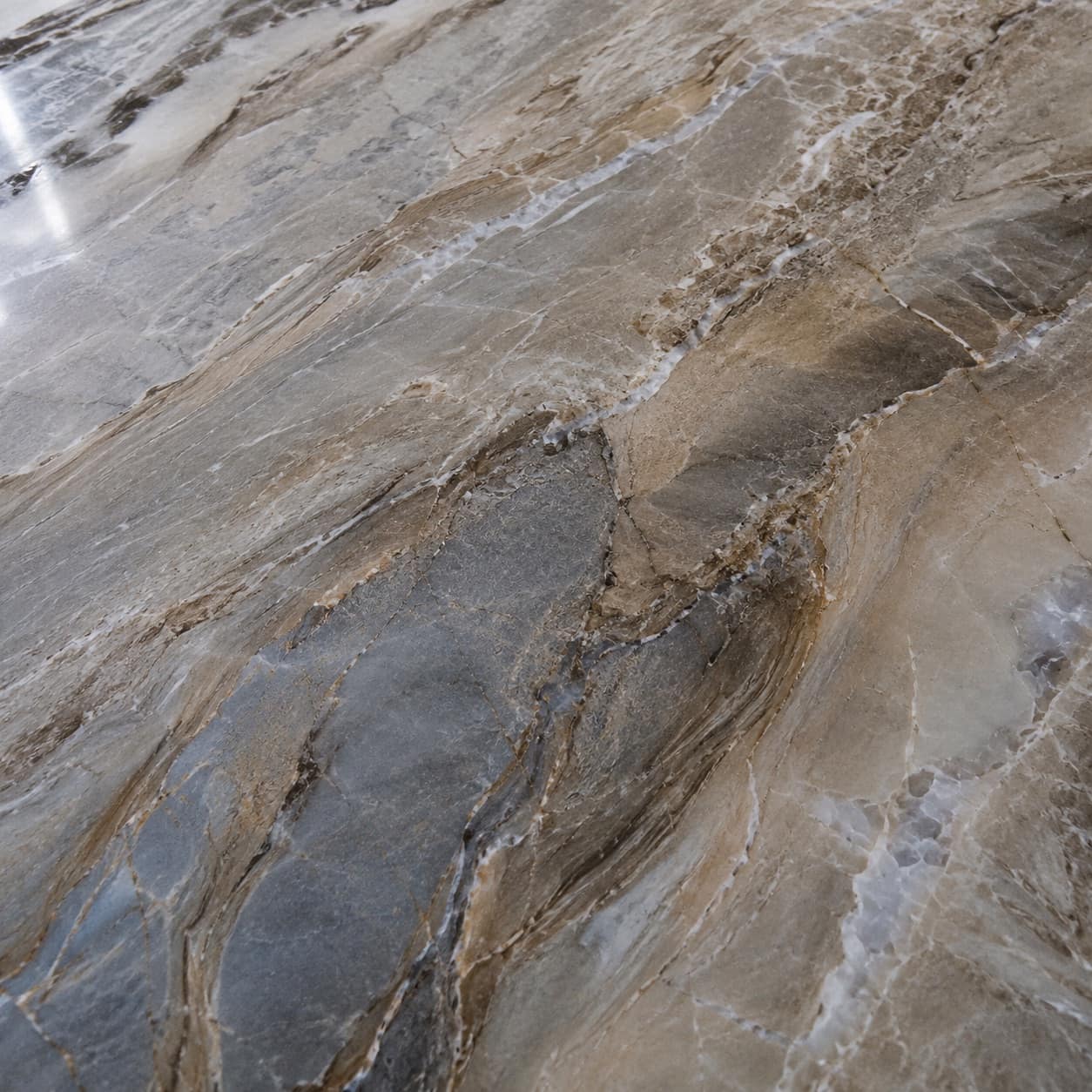
Quartzite is natural stone quarried from the earth. It’s harder than granite, and a glass of red wine left out overnight won’t stain it. People often mix it up with quartz, but quartzite is stone and quartz is engineered, and the two behave differently. If you want the look of marble with less upkeep, quartzite is usually the best fit. Read more about quartzite countertops.
Quartzite · slab detail Granite
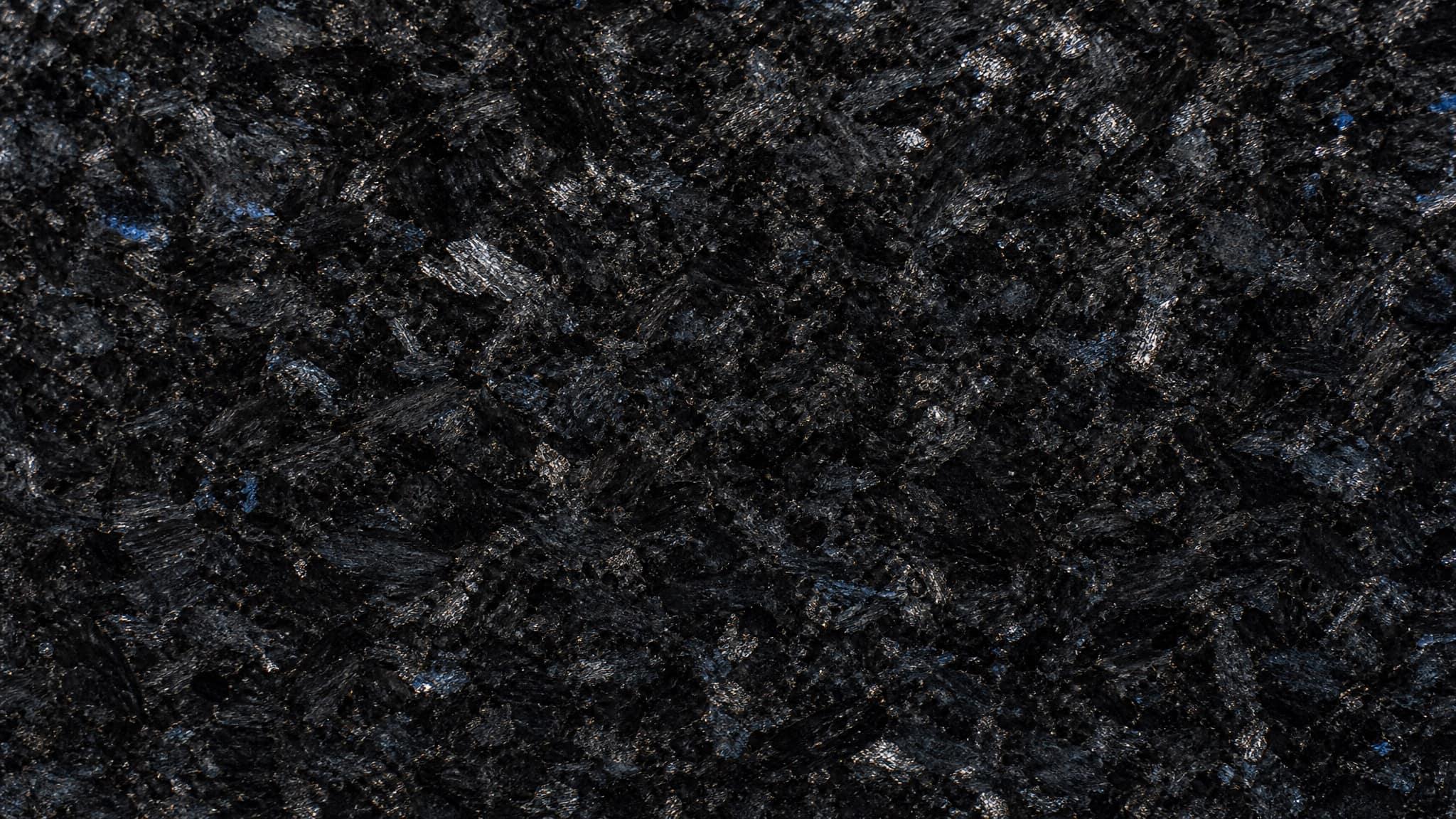
Granite has been a standard kitchen counter for decades and is still a good choice. It takes a hot pan straight off the stove, resists scratches, and only needs an occasional reseal. It’s a dependable surface for a kitchen that gets heavy use every day for years. Read more about granite countertops.
Granite · slab detail Caesarstone
Caesarstone is one of the most established quartz brands on the market. Its lifetime warranty only holds if a certified fabricator does the installation. Calder is Caesarstone-certified, so the manufacturer backs our work along with the slab. Read more about Caesarstone.
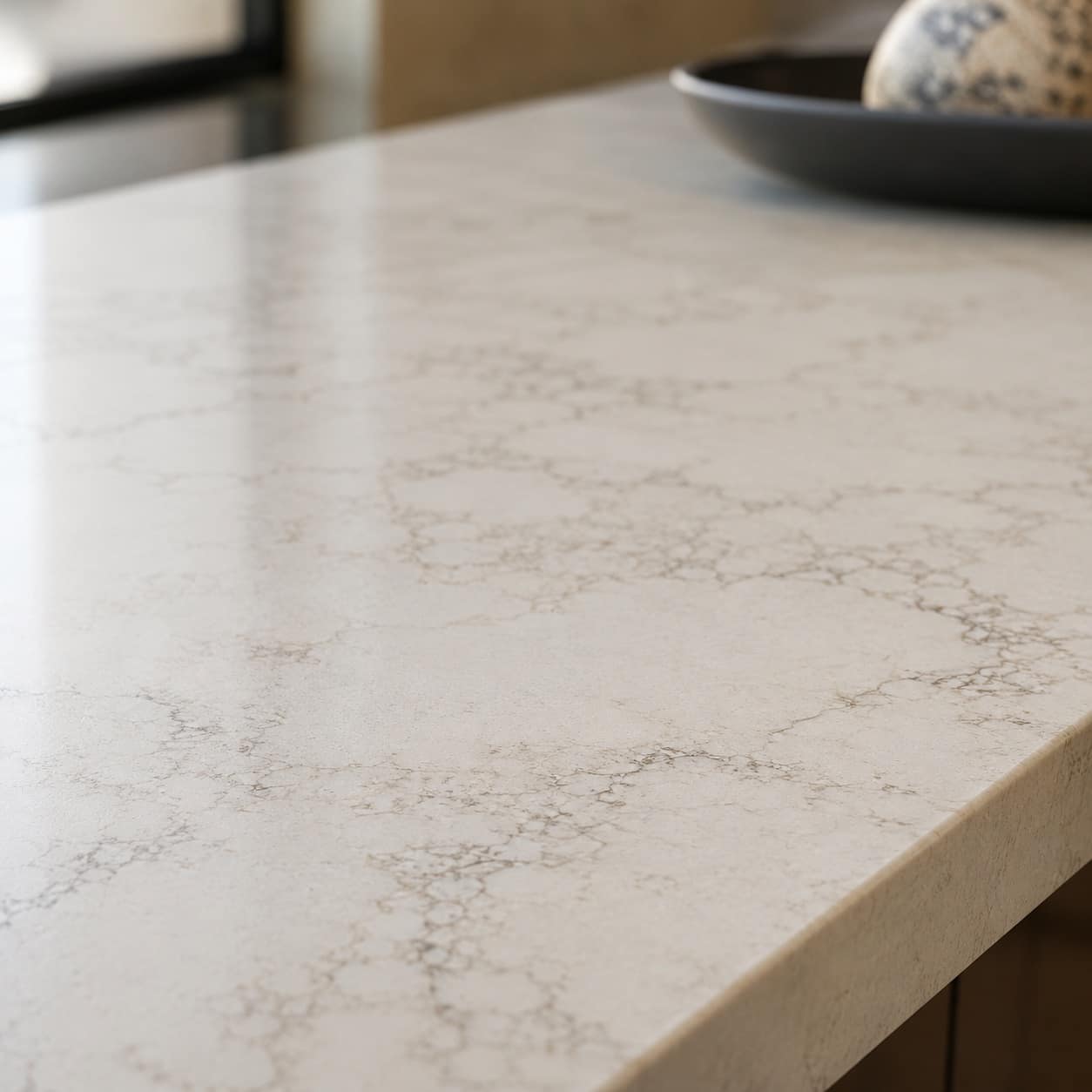
Caesarstone · slab detail Cambria
Cambria is an American-made quartz brand with its own warranty, and that warranty also depends on certified installation. Calder is Cambria-certified as well, so you can choose either brand for your kitchen and keep the manufacturer warranty. Read more about Cambria.
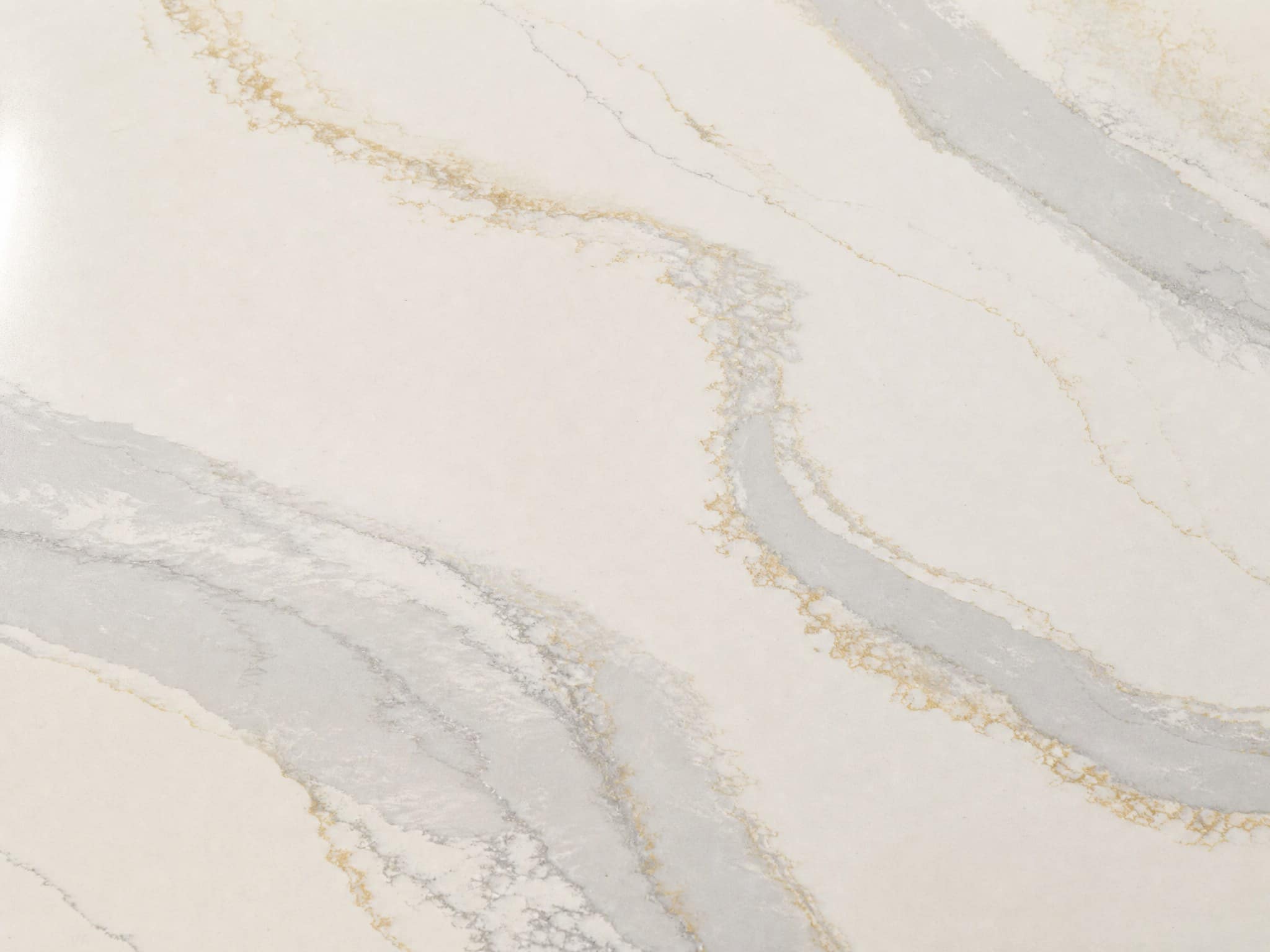
Cambria · slab detail
A note on marble and Dekton
Marble is beautiful, but it’s a soft stone, and a kitchen is hard on a countertop. We’ll fabricate it if that’s what’s specified, and we’ll explain the care it needs before you commit. Dekton works fine indoors too, but it does its best work in outdoor kitchens and BBQ surrounds, where UV stability matters most. See Dekton countertops.
Plenty of people start out unsure which of these fits their kitchen. Our quote builder has a “not sure yet” option at the material step for that reason. We’ll go through the tradeoffs with you when you choose your slab, so you don’t have to guess ahead of time.
Craft details
Backsplashes, waterfall islands and edges
Backsplashes, waterfall islands and edge profiles take the most planning in a kitchen, and they decide how the finished room looks.
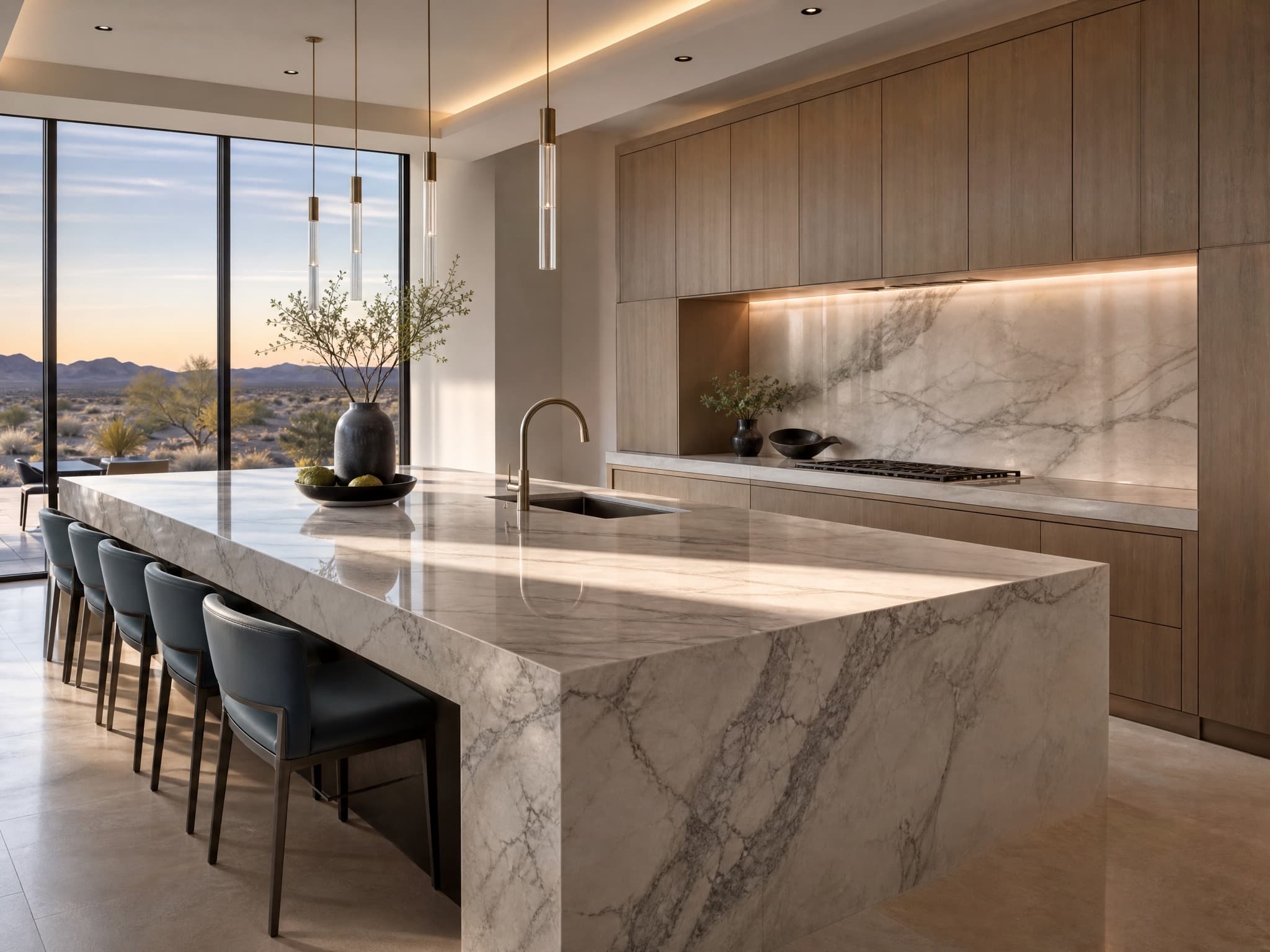
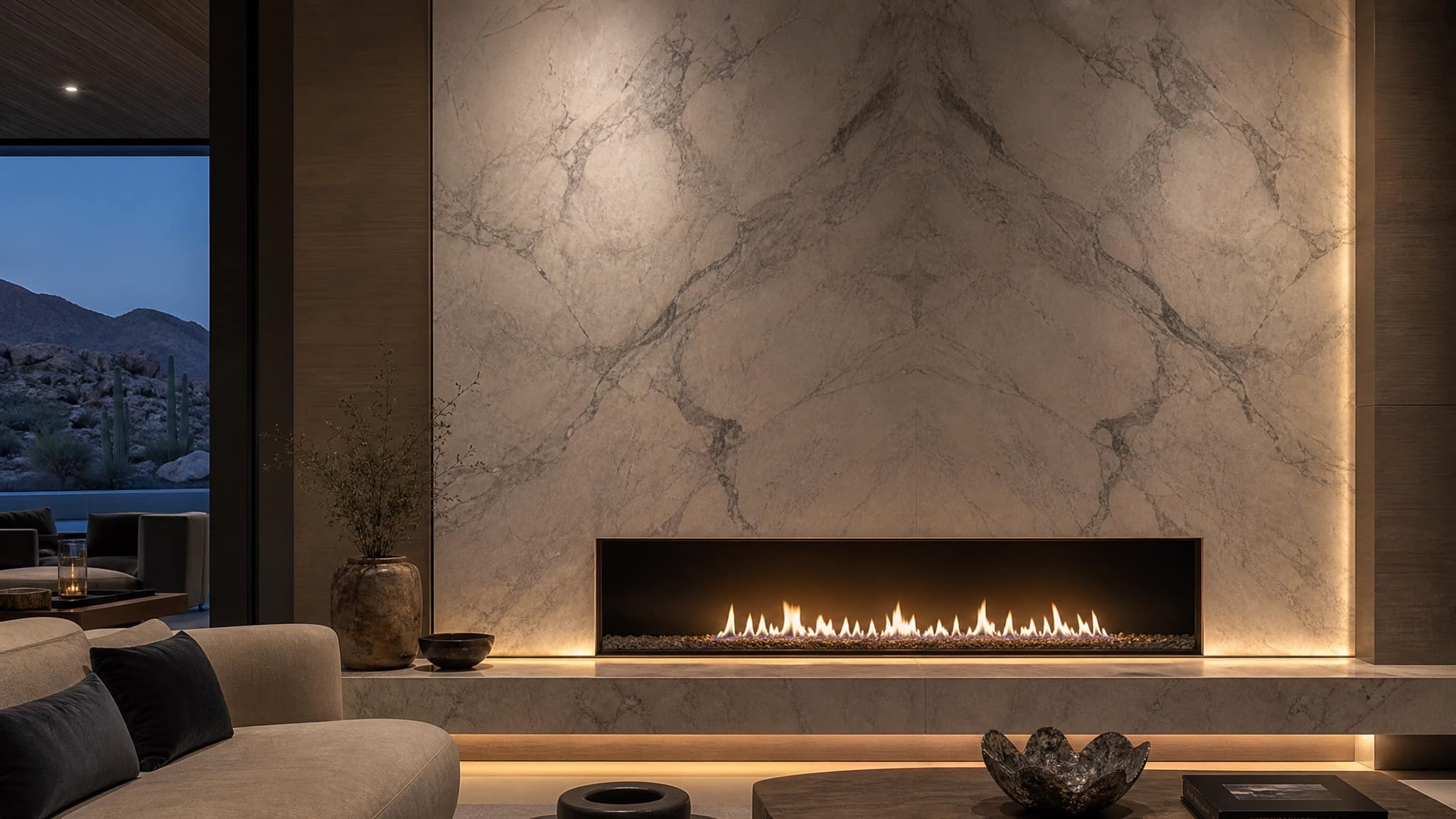
A full-height backsplash cut from the same slab as your counter looks like one continuous surface, where tile would look like a separate material stacked on top. We plan the cut so the veining runs up the wall the same way it runs across the counter, instead of jumping to an unrelated section of stone.
A waterfall island takes the same idea further. The counter appears to drop straight down the side of the island in one piece, with a mitered edge that hides the joint, so the stone seems to wrap the corner as a single slab. A good mitered waterfall depends on seam planning first and cutting second. We lay out the whole piece, including where the miter falls against the vein, before the saw touches the slab.
Seam planning matters anywhere a large kitchen counter runs longer than one slab. We put seams where they’re least visible, away from the sink and the main sightline from the doorway, and we match the vein across each seam so the two pieces look like continuous stone.
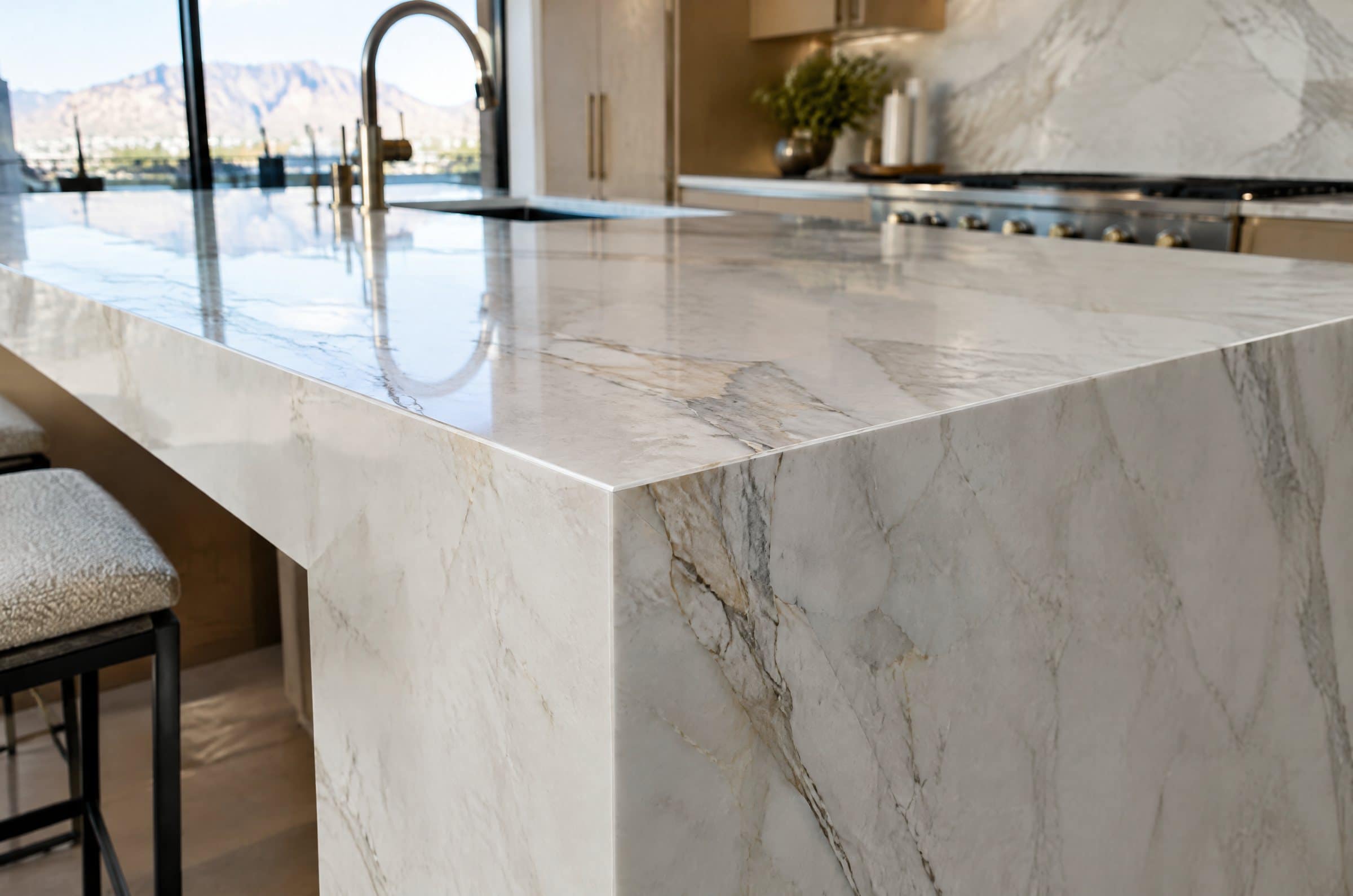
It’s worth choosing the edge profile early, because it changes how the counter looks from across the room. An eased or bullnose edge keeps the line soft and simple. A square or mitered edge looks sharper and more architectural, and a waterfall island needs a mitered edge to hide its seam. No profile is better than the others. The right one is whichever suits the rest of the kitchen, and we’ll go through the options with you before anything is cut.
The shop
Fabricated and installed by the same crew
Fabrication mistakes show up most in a kitchen, with its long sightlines, mitered islands and cutouts around sinks and cooktops. That’s why one Calder crew handles a kitchen from start to finish. The same crew laser-measures the room, cuts the slab on our five-axis bridge saw and installs the finished counter. During the project you get daily updates and photo reports, so you aren’t waiting for a single call when it’s done. Learn more about the fabrication shop and our process from measurement to install day.
Before you start
What helps us quote a kitchen
Rough dimensions of your counter runs and island, even an estimate
Your material preference, or “not sure yet” if you want help deciding
Sink and cooktop cutout count
Photos of the existing kitchen, or your cabinet layout and plans if it’s new construction
Start my quote takes about two minutes, and there’s no obligation. We prepare a formal quote from your answers and then go over the next steps with you.
Answers
Kitchen countertop questions
- What’s the best countertop material for a kitchen remodel in Las Vegas?
- Quartz, quartzite and granite are the strongest choices for a Las Vegas kitchen, along with Caesarstone and Cambria, the two quartz brands we are certified to fabricate. All five stand up well to stains and daily wear. Quartz needs the least upkeep and never needs sealing, while granite and quartzite need an occasional reseal. All five are durable enough for a kitchen, so the choice usually comes down to the look you want and how much maintenance you are willing to do.
- How does the countertop replacement process work?
- It starts with a visit to our Henderson fabrication shop, by appointment, where you pick your material. Then we measure your kitchen on site with a laser. That measurement goes straight to our five-axis bridge saw, which cuts your counter to fit exactly with no gaps to fill. The crew that cut it also installs it, and they walk through the finished kitchen with you. See the full process.
- Will I see the seams in my countertop?
- Any counter longer than a single slab needs a seam somewhere, but you shouldn’t notice it unless you look for it. We place seams away from the sink and the main sightlines and match the vein across each one, so the stone looks like one continuous piece. Seam placement is one of the easiest ways to judge how carefully a shop fabricates.
- Can my backsplash match my countertop?
- Yes. A full-height backsplash cut from the same slab as your countertop carries the same veining up the wall, so the counter and backsplash look like one piece of stone. We plan the backsplash at the same layout stage as the counter, before anything is cut.
- What’s the difference between quartz and quartzite for a kitchen?
- Quartz is engineered in a factory from stone dust and resin. Quartzite is natural stone quarried from the earth. People mix them up because the names sound alike, but they behave differently. Quartz never needs sealing and comes in more colors. Quartzite is a true natural stone and is harder than granite. Both work well in a kitchen, so the choice comes down to whether you want an engineered surface or natural stone.
Specifying for a client? Visit our trade page.